
Integrated Township vs Standalone Tower: Which Delivers Better Returns?
Integrated townships offer lifestyle and amenities but higher entry pricing. Standalone towers offer lower entry but fewer amenities. We compare the ROI.
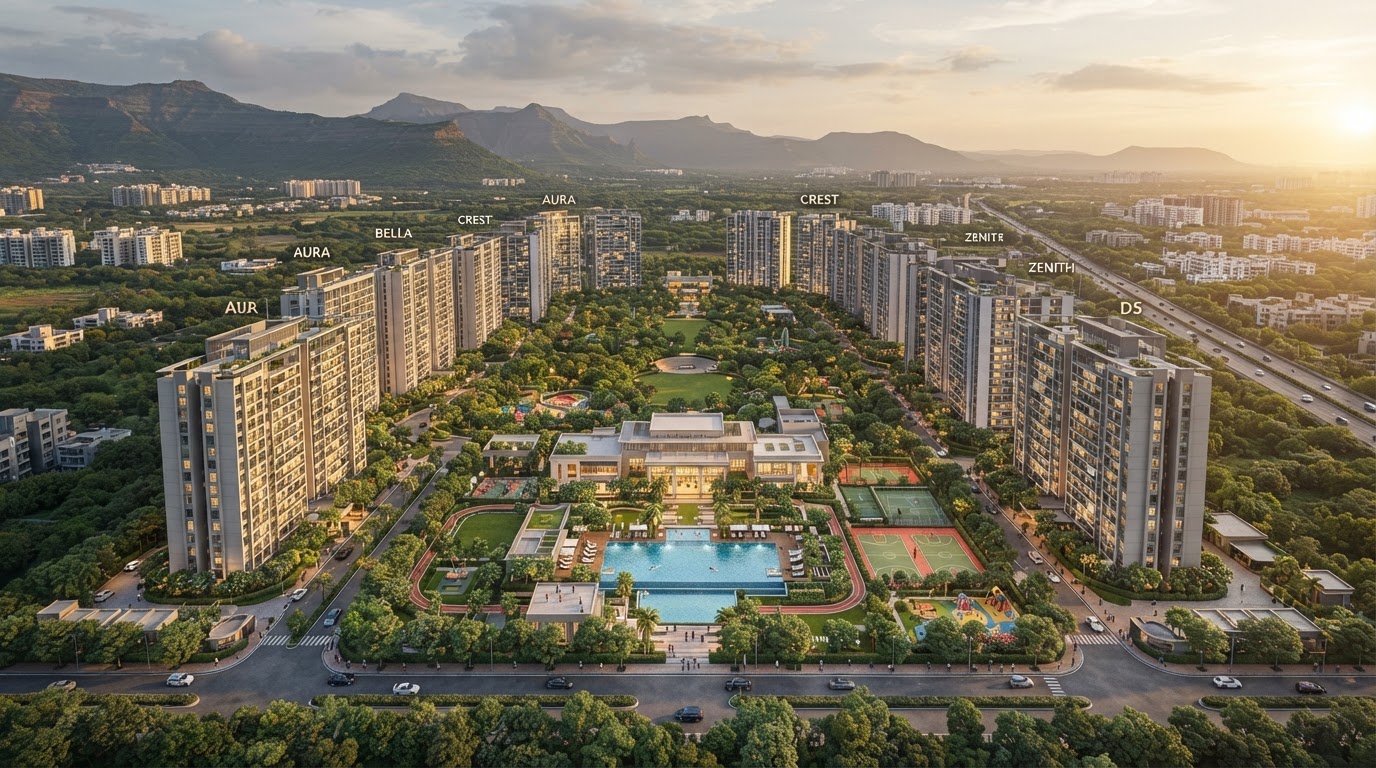
The choice between an integrated township and a standalone tower is one of the most common decisions for residential property investors. Both have their merits, and the ROI outcome depends on the micro-market, the developer, and the holding period.
Integrated townships:
Integrated townships are large-scale developments (typically 20–100+ acres) that include residential towers, a clubhouse, landscaped gardens, schools, retail, and sometimes commercial office space. Examples: Lodha Palava (Mumbai), Godrej Garden City (Ahmedabad), Brigade Gateway (Hyderabad).
Advantages: - Lifestyle and amenities: The township offers a self-contained lifestyle with premium amenities — clubhouses, pools, sports facilities, gardens, schools, and retail. This supports a premium positioning and strong end-user demand. - Brand and community: Townships develop a brand identity and a community, which supports pricing and resale demand. - Infrastructure: Townships often include internal infrastructure (roads, drainage, power backup) that is superior to standalone towers.
Disadvantages: - Higher entry pricing: Townships typically command a 15–25% premium over standalone towers in the same micro-market, reflecting the amenity and lifestyle premium. - Slower appreciation: The higher entry pricing means the appreciation percentage is often lower than standalone towers, because the premium is already priced in. - Location: Townships are often on the periphery (where large land parcels are available), which can limit connectivity and end-user demand.
Standalone towers:
Standalone towers are single-building developments (typically 1–2 towers on a 1–3 acre parcel) without the integrated township amenities. Examples: most premium high-rises in Mumbai's Worli–Prabhadevi belt, Bengaluru's Whitefield standalone towers.
Advantages: - Lower entry pricing: Standalone towers are typically 15–25% cheaper than townships in the same micro-market, offering a lower entry point. - Higher appreciation potential: The lower entry pricing means more room for appreciation, particularly in emerging micro-markets. - Location flexibility: Standalone towers can be built in prime, connected locations where large township parcels are unavailable.
Disadvantages: - Fewer amenities: Standalone towers offer basic amenities (a small gym, a pool) but not the integrated lifestyle of a township. - Smaller community: The community is smaller, which can affect resale demand and pricing.
ROI comparison:
In an emerging micro-market (e.g., Sarjapur Road, Tellapur): - Township: Entry at ₹9,000/sq ft, expected 20% appreciation over 4 years = ₹1,800/sq ft gain. - Standalone tower: Entry at ₹7,500/sq ft, expected 30% appreciation over 4 years = ₹2,250/sq ft gain.
The standalone tower delivers a higher ROI in emerging markets, because the lower entry pricing allows more appreciation.
In an established micro-market (e.g., Worli, Bandra): - Township (rare in established markets): Entry at ₹70,000/sq ft, expected 10% appreciation = ₹7,000/sq ft gain. - Standalone tower: Entry at ₹60,000/sq ft, expected 12% appreciation = ₹7,200/sq ft gain.
In established markets, the ROI difference is smaller, and the lifestyle and community advantages of townships may justify the premium.
Our view: For pure investment ROI in emerging markets, standalone towers from tier-1 developers offer the better return. For end-use or lifestyle-driven investment in established markets, integrated townships offer a superior lifestyle with comparable ROI. The key is matching the choice to the investment objective and the micro-market stage.
Want these insights delivered before anyone else?
Join our confidential investor briefing — subvention alerts, off-market deals and market intelligence, first.
More from Investment Strategy

How Investor Syndication Unlocks Wholesale Developer Pricing
One investor gets retail pricing. Ten investors syndicated through us get wholesale. Here's the mechanics of bulk-buying power.

REITs vs Physical Property: Where Should the Smart Money Go?
Indian REITs offer liquidity and yield, but physical property offers leverage and appreciation. We compare the two.

How Indian Family Offices Are Allocating to Real Estate in 2026
Family offices are shifting from pure equity to real estate for yield, inflation hedge, and generational wealth. We break down the allocation framework.