
FAQ: What Is the Difference Between Freehold and Leasehold Property?
Freehold means you own the land and building permanently. Leasehold means you lease the land for a fixed period. Here's why it matters.
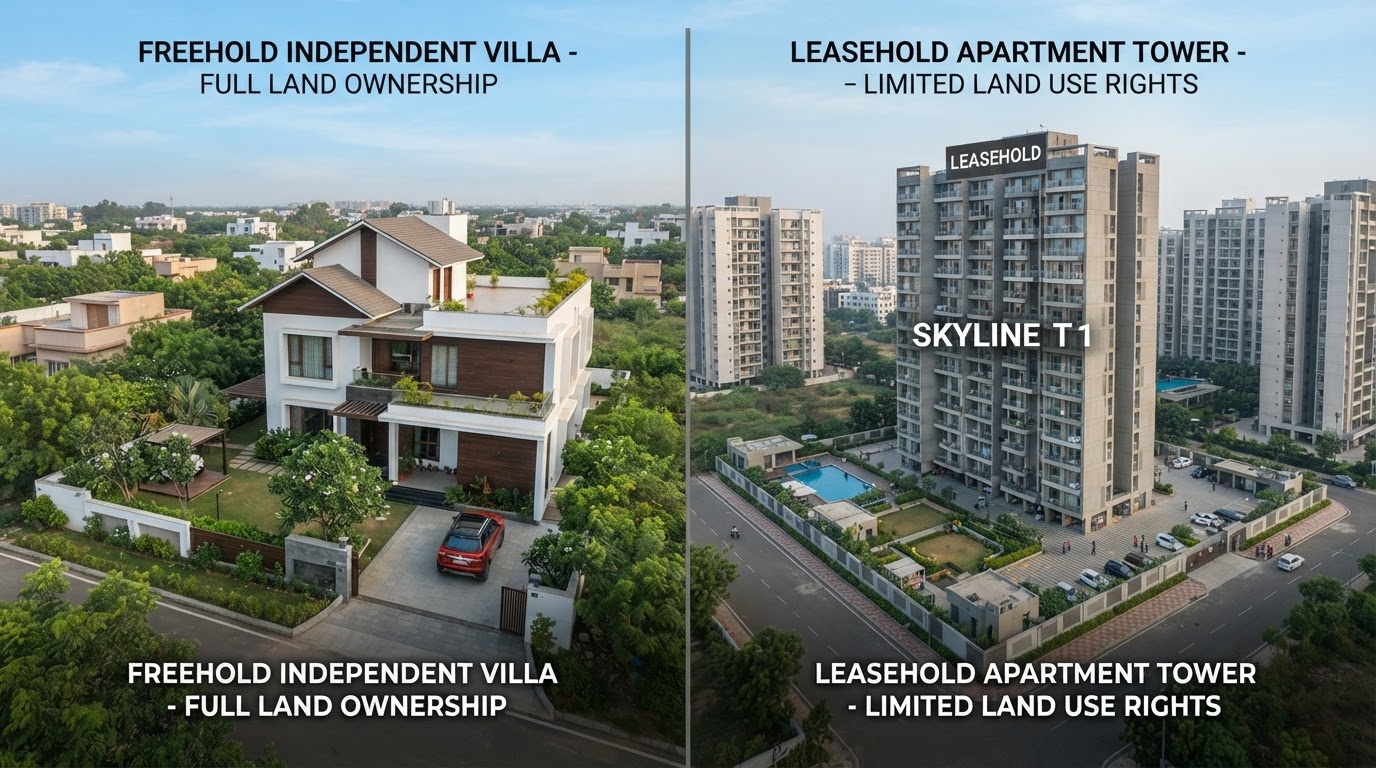
The distinction between freehold and leasehold is fundamental to property ownership in India, and it significantly affects the value, rights, and resale potential of a property.
Freehold property: You own the land and the building on it permanently, with full ownership rights. You can sell, lease, mortgage, or bequeath the property without restriction. Freehold is the most complete form of ownership and is what most buyers aspire to. Independent houses, villas, and plots within approved layouts are typically freehold. Apartments in a building are technically a form of co-operative ownership (undivided share of land + construction), but for practical purposes, they function like freehold.
Leasehold property: You lease the land from the government or a authority (like DDA in Delhi or NDMC) for a fixed period — typically 99 years or 33 years. You own the building but not the land underneath. You pay a ground rent to the lessor. Leasehold properties can be sold, but the buyer takes over the remaining lease period.
Key differences:
1. Ownership: Freehold = permanent ownership of land + building. Leasehold = ownership of building only, land is leased.
2. Value: Freehold properties command a premium of 15–30% over comparable leasehold properties, because the buyer gets perpetual land ownership.
3. Transfer: Selling a leasehold property requires the lessor's permission (a 'no-objection certificate') and payment of transfer charges. Freehold properties can be transferred freely.
4. Mortgage: Banks prefer freehold properties for home loans. Leasehold properties are financed only if the remaining lease period is substantial (typically 30+ years).
5. Conversion: In some states (like Delhi), leasehold properties can be converted to freehold by paying a conversion fee to the authority. This is usually worth doing, as it increases the property's value and marketability.
In Delhi, many DDA properties are leasehold. In Mumbai, some properties on collector's land are leasehold. Most properties in Bengaluru, Hyderabad, Pune, and other South and West Indian cities are freehold.
Our rule: always verify whether a property is freehold or leasehold before purchase. If it's leasehold, check the remaining lease period and whether conversion to freehold is possible.
Want these insights delivered before anyone else?
Join our confidential investor briefing — subvention alerts, off-market deals and market intelligence, first.
More from FAQs
FAQ: What Is Builder Subvention and Is It Safe?
Builder subvention lets you pay a small percentage upfront and the rest at possession with zero interest. We explain how it works and the risks to watch.

FAQ: How Much Down Payment Do I Need for an Under-Construction Property?
Down payment requirements vary by payment plan and builder. We break down the typical percentages and how to minimize your upfront outflow.
FAQ: Can an NRI Buy Agricultural Land in India?
No. Under FEMA rules, NRIs and OCIs cannot purchase agricultural land, farmhouses, or plantation property in India. Here's what they can buy instead.