
Transit-Oriented Development: The Next Wave of Indian Real Estate
TOD policy is reshaping Indian cities, allowing higher density development around transit nodes. We analyze the investment opportunity.
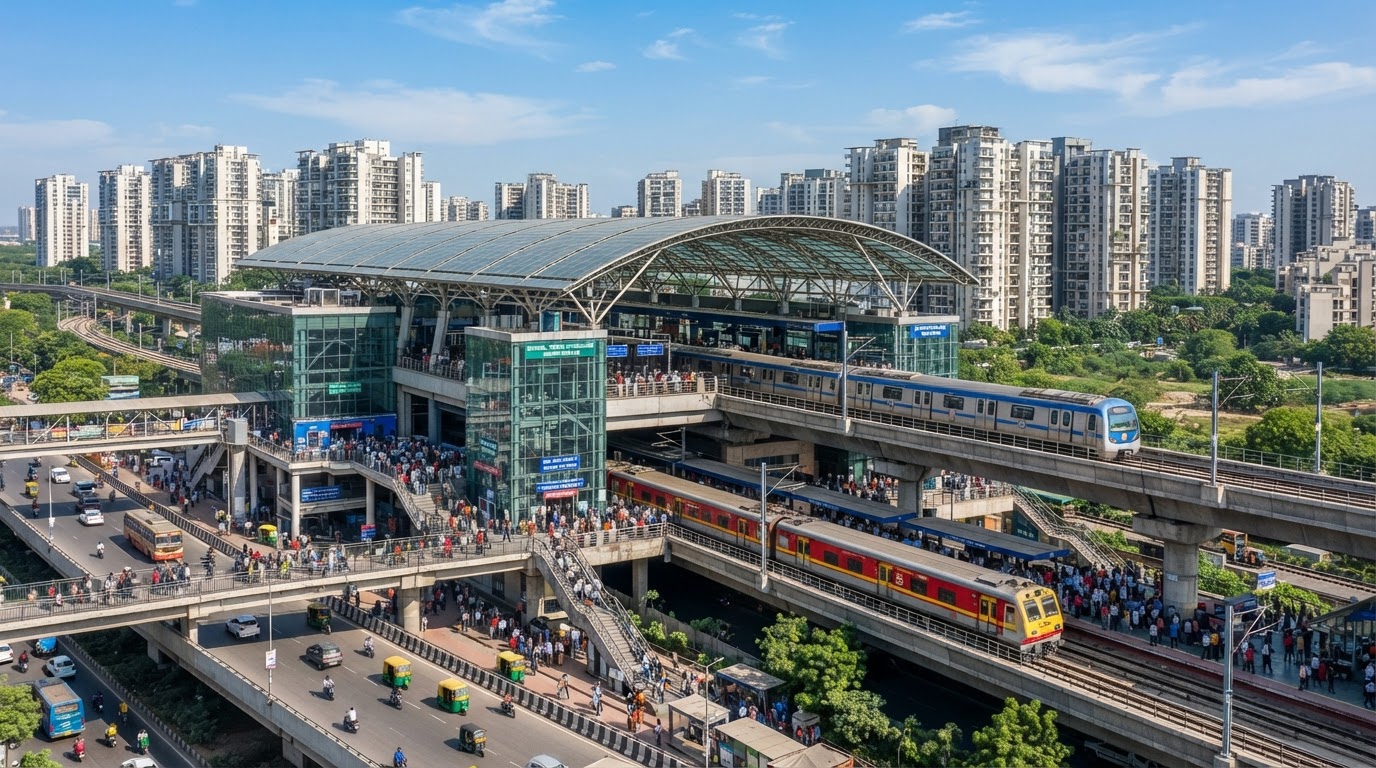
Transit-Oriented Development (TOD) is a urban planning policy that allows higher-density, mixed-use development around transit nodes (metro stations, railway stations, bus terminals). India's TOD policy, adopted by several states, is reshaping city development patterns and creating a new real estate investment opportunity.
What is TOD?
TOD is a planning approach that encourages compact, mixed-use development within walking distance (typically 500–800 meters) of transit nodes. The goal is to reduce dependence on private vehicles, improve walkability, and create vibrant, connected neighborhoods.
Under TOD policy, developers can build at higher Floor Space Index (FSI) — the ratio of built-up area to land area — within the TOD zone. In Mumbai, the base FSI is 1.0–2.0, but TOD zones can get FSI of 3.0–4.0 or higher. In Bengaluru, the base FSI is 1.5–2.5, but TOD zones can get FSI of 3.0–4.5. This higher FSI allows more units on the same land, improving the economics for developers and creating more supply.
The TOD investment opportunity:
1. Higher density, more units: The higher FSI allows more units per acre, which can improve the developer's margins and create more supply. For investors, this means more options but also more supply, which can moderate pricing.
2. Premium pricing for transit proximity: Properties within the TOD zone (walking distance to the transit node) command a premium for the connectivity. This premium is 10–20% over properties outside the TOD zone.
3. Mixed-use development: TOD zones allow mixed-use (residential, commercial, retail) development, creating vibrant, 24/7 neighborhoods. This mixed-use character supports both residential demand and commercial/retail yield.
4. Rental demand: TOD zones, with their connectivity and mixed-use character, attract strong rental demand from professionals who value transit access. Rental yields in TOD zones are typically 0.5–1% higher than non-TOD zones.
The cities adopting TOD:
- Mumbai: MahaRERA has a TOD policy for areas around metro and suburban railway stations. The impact is most pronounced along the Metro Line 3 (Colaba–Bandra–SEEPZ) and the Coastal Road corridors.
- Bengaluru: The Karnataka government has a TOD policy for areas around metro stations. The impact is most pronounced along the Purple Line (Whitefield–Kengeri) and the upcoming Phase 2B (Sarjapur–Airport).
- Delhi NCR: The DDA has a TOD policy for areas around metro stations. The impact is most pronounced along the Dwarka Expressway and the Noida Expressway corridors.
- Hyderabad: The Telangana government has a TOD policy for areas around metro stations. The impact is most pronounced along the ORR and the Financial District.
The investment thesis:
TOD zones offer a connectivity premium (10–20% over non-TOD), higher rental yields (0.5–1% higher), and mixed-use development potential. The optimal investment is in under-construction inventory within the TOD zone of a metro station that is under construction or recently operational.
The risk: TOD policy implementation varies by city and can be slow. The higher FSI can create supply overhangs in some zones, moderating pricing. We filter to TOD zones with strong demand drivers (employment, lifestyle) and credible developers.
Our view: TOD is the next wave of Indian real estate development. The connectivity premium, the higher rental yields, and the mixed-use character make TOD zones attractive for both appreciation and yield. Investors should position in under-construction inventory within TOD zones of metro corridors under construction, with a 4–5 year hold to capture the transit operationalization and the TOD maturation premium.
Want these insights delivered before anyone else?
Join our confidential investor briefing — subvention alerts, off-market deals and market intelligence, first.
More from Policy & RERA

RBI Rate Trajectory: What It Means for Home Loan and Property Investors
The RBI's rate path is reshaping borrowing costs and buyer sentiment. Here's how it affects under-construction investment decisions.

RERA Compliance: The Investor's Pre-Purchase Checklist
RERA registration is non-negotiable. We share the 8-point checklist we use to verify RERA compliance before any property purchase.
The 'Wait for RERA Approval' Rule: Why It Protects Investors
Booking before RERA registration is risky. We explain why the 'wait for RERA' rule is the single most important investor protection.