
EV Charging in Residential Complexes: The New Amenity
EV charging is becoming a must-have amenity in premium residential complexes. We analyze the impact on property value and the investment case.
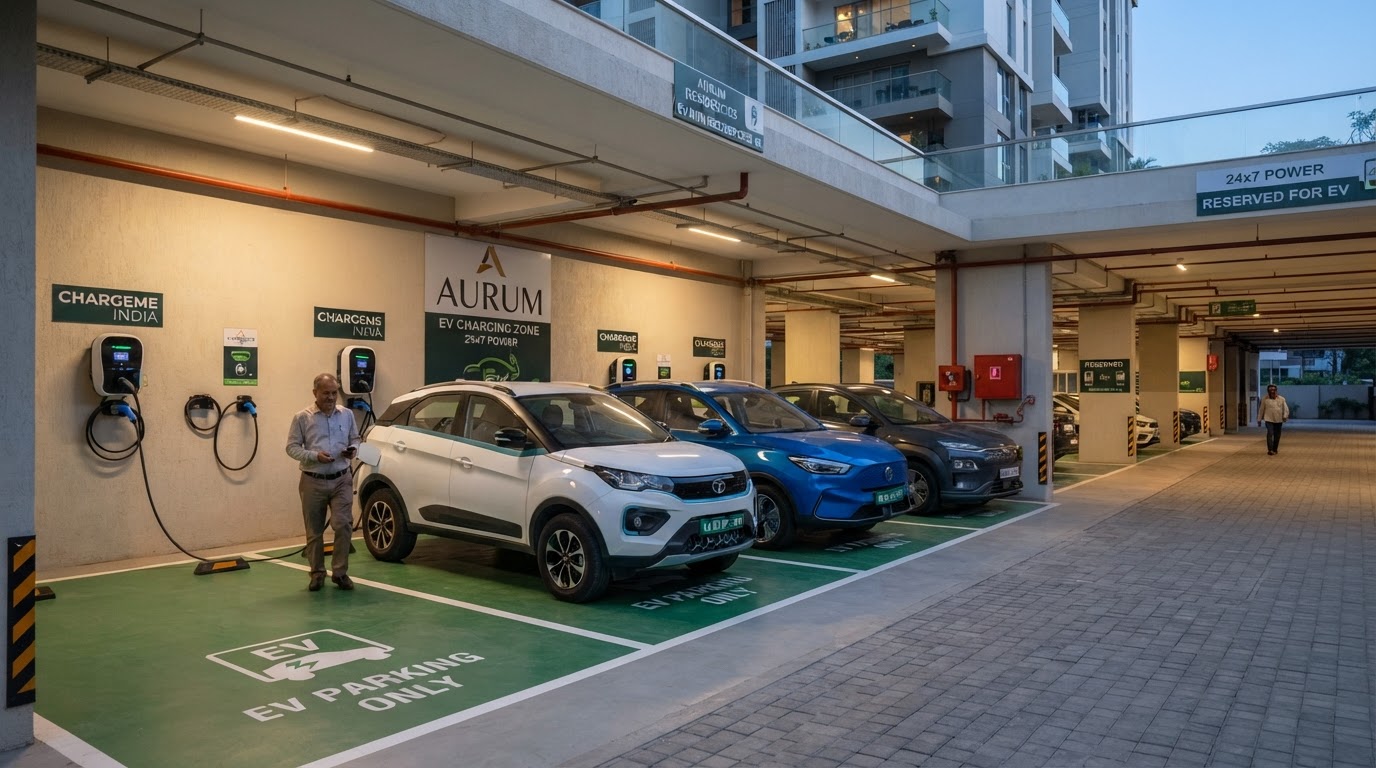
Electric vehicle (EV) adoption in India is accelerating, driven by falling EV prices, expanding charging infrastructure, and government incentives. For residential real estate, EV charging is rapidly transitioning from a niche feature to a must-have amenity in premium complexes — and it's becoming a value driver for property pricing.
The EV adoption trajectory:
India's EV market is growing rapidly. EV car sales are expected to reach 15–20% of total car sales by 2028, driven by models from Tata, Mahindra, MG, and the entry of global players (Tesla, BYD). Two-wheeler EV adoption is even faster, with 30–40% of new two-wheeler sales expected to be electric by 2028.
The key constraint for EV adoption is charging infrastructure — particularly home charging, which is the primary charging mode for most EV owners. This makes EV charging in residential complexes a critical enabler of EV adoption, and a growing value driver for real estate.
The residential EV charging landscape:
1. Premium complexes (new): Most new premium residential complexes (2024+) are being built with EV charging infrastructure — either dedicated EV parking slots with charging points, or electrical infrastructure (load capacity, conduit) that allows individual owners to install chargers. This is becoming a standard amenity in premium developments.
2. Existing complexes (retrofit): Existing complexes are increasingly retrofitting EV charging, driven by resident demand. The retrofit involves upgrading the electrical load capacity, installing common charging points, and establishing a usage/billing system. The retrofit cost is ₹5–15 lakh for a typical complex, borne by the society or the developer.
3. Affordable and mid-market: EV charging is slower to penetrate affordable and mid-market complexes, due to the cost and the lower EV adoption in this segment. However, as EV prices fall, the demand will extend to these segments.
The impact on property value:
1. Premium pricing: Residential complexes with EV charging command a 3–7% pricing premium over comparable complexes without EV charging. The premium reflects the growing buyer preference for EV-ready homes and the future-proofing value.
2. Rental demand: Tenants with EVs (a growing demographic) prefer complexes with charging, supporting rental demand and yields. The rental premium for EV-ready units is 5–10%.
3. Future-proofing: As EV adoption accelerates, complexes without charging will face a competitive disadvantage. EV-ready complexes are future-proofed, protecting their value as the market shifts.
4. Regulatory tailwind: Several states are mandating EV charging in new residential developments (particularly for complexes above a certain size). This regulatory push will make EV charging a standard requirement, and complexes that are already EV-ready will be ahead of the curve.
The investment case:
For investors in residential real estate, EV charging is a growing value driver. The 3–7% pricing premium and the rental demand uplift provide a tangible return on the EV-ready feature. The future-proofing value is the longer-term benefit — as EV adoption accelerates, the gap between EV-ready and non-EV-ready complexes will widen.
The cost: For new developments, the EV charging infrastructure adds 0.5–1% to the construction cost, which is embedded in the purchase price. For existing complexes, the retrofit cost (₹5–15 lakh) is borne by the society, and the benefit accrues to all unit owners.
Our view: EV charging is transitioning from a niche amenity to a standard requirement in premium residential complexes. For investors, prioritizing EV-ready complexes (new developments with charging infrastructure) provides a pricing premium, rental demand, and future-proofing. The EV-ready feature is a positive factor in residential selection, particularly in premium and IT-corridor micro-markets where EV adoption is fastest.
Want these insights delivered before anyone else?
Join our confidential investor briefing — subvention alerts, off-market deals and market intelligence, first.
More from Sustainable & Future Trends
Green Building Certification (IGBC/GRIHA): The Premium Driver
IGBC and GRIHA certified buildings command a 5–10% pricing premium and higher rental yields. We analyze the green building investment case.

Senior Living Communities: The Demographic-Driven Segment
India's senior population is growing rapidly, creating demand for dedicated senior living communities. We analyze the investment opportunity.
Co-Living Spaces: The Affordable Urban Model
Co-living is reshaping urban rental housing for young professionals. We analyze the investment profile and whether it's a sustainable yield play.