
Hyderabad Regional Ring Road (RRR): The Next Expansion Zone
The proposed 340-km RRR will encircle Hyderabad at a 30–40 km radius, opening up vast new land for development and creating the next expansion zone.
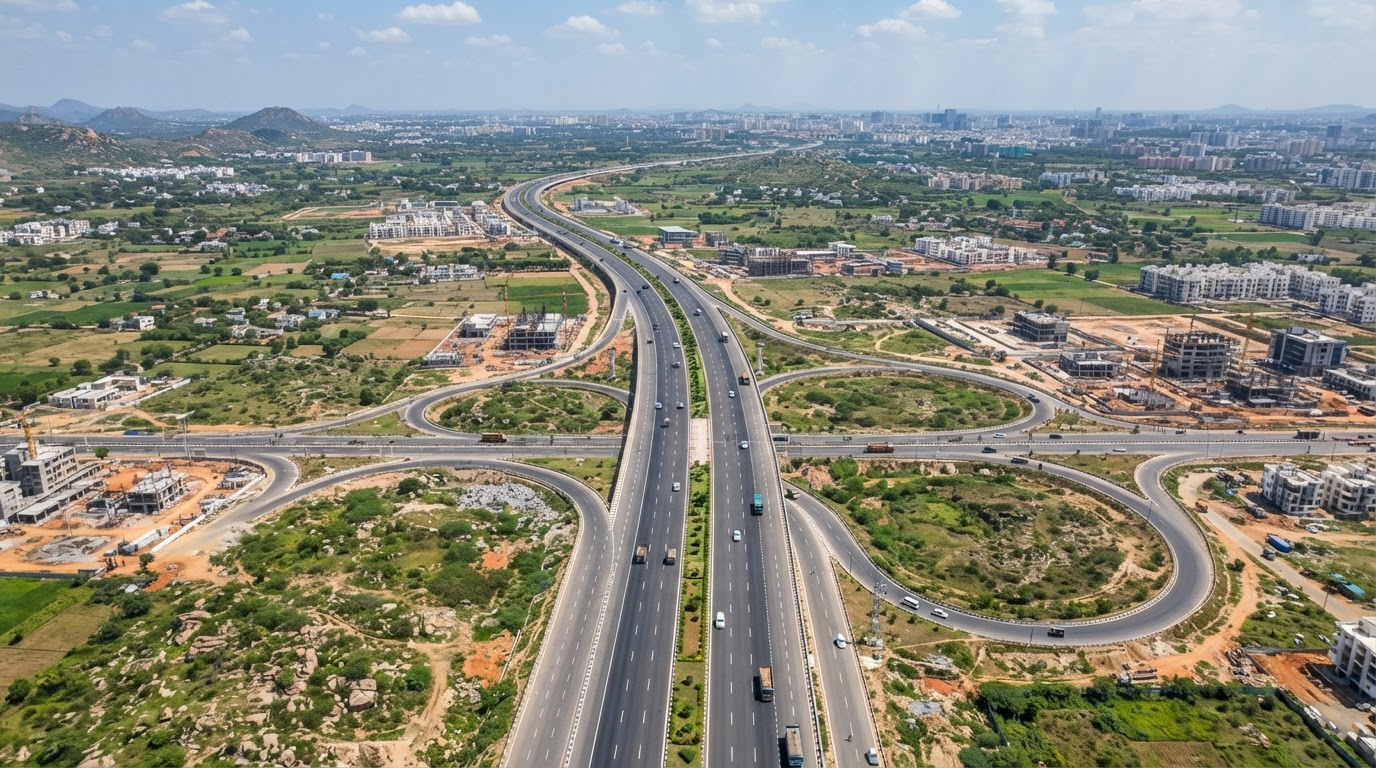
The Hyderabad Regional Ring Road (RRR) — a proposed 340-km ring road encircling Hyderabad at a 30–40 km radius from the city center — is the infrastructure project that will define Hyderabad's next decade of real estate expansion. For investors, the RRR corridor represents the next frontier of Hyderabad's westward and northern growth.
What the RRR does:
The RRR is an outer regional bypass that connects the towns and nodes surrounding Hyderabad — including Sangareddy, Toopran, Bhongir, Choutuppal, and Shadnagar — creating a regional circulation route that bypasses the city. The RRR is designed to:
1. Decongest the ORR: By providing a regional bypass, the RRR diverts through-traffic (trucks, inter-city vehicles) away from the ORR, reducing congestion on the inner ring road.
2. Open up new land: The RRR passes through areas that are currently agricultural or lightly developed, opening them up for residential, industrial, and logistics development.
3. Connect satellite towns: The RRR connects the satellite towns around Hyderabad, creating a regional metropolitan area rather than a single-city market.
The real estate impact:
1. New residential corridors: The RRR will open up new residential corridors at a 30–40 km radius from the city center, where land is currently inexpensive (₹1,500–4,000/sq ft for plots). These corridors will become viable for residential development once the RRR provides connectivity.
2. Industrial and logistics: The RRR will support industrial and logistics parks, creating employment along the outer belt and supporting residential demand.
3. Satellite town development: Towns like Sangareddy, Toopran, and Shadnagar will see accelerated development as the RRR connects them to the Hyderabad metropolitan area.
The investment thesis:
The RRR is a 7–12 year play. The project is in the planning and land acquisition phase, with construction expected to take 5–7 years. The appreciation will materialize as the RRR nears completion and the outer corridors develop.
For investors, the RRR corridor offers the lowest entry pricing in the Hyderabad metropolitan area and the highest long-term appreciation potential. The expected appreciation: 50–150% over a 7–12 year hold, for well-located land along the RRR route.
The risks:
1. Timeline risk: The RRR is a mega-project with a long timeline. The land acquisition, environmental clearance, and construction will take years, and the timeline is uncertain.
2. Land title risk: The outer belt has a higher incidence of title disputes and agricultural land classification. Due diligence is critical.
3. Liquidity risk: The RRR corridor is illiquid. Exit options are limited until the RRR is operational and the area develops.
4. Competition from ORR corridor: The established ORR corridor (Kokapet, Tellapur, Mokila) will continue to absorb demand for the next 5–7 years, before the RRR corridor becomes competitive. The RRR corridor is a later-cycle play.
Our view: the RRR is a legitimate long-term play for investors with patient capital and a high risk tolerance. The entry pricing is the lowest in the Hyderabad area, and the appreciation potential is the highest. But the timeline is long, and the risks are significant. We recommend the RRR corridor only for investors who can hold for 7–12 years and who have the capacity for thorough land due diligence. For most investors, the nearer-term ORR corridors (Mokila, Kollur, Tellapur) offer a better risk-adjusted return over a 4–5 year horizon.
Want these insights delivered before anyone else?
Join our confidential investor briefing — subvention alerts, off-market deals and market intelligence, first.
More from Infrastructure
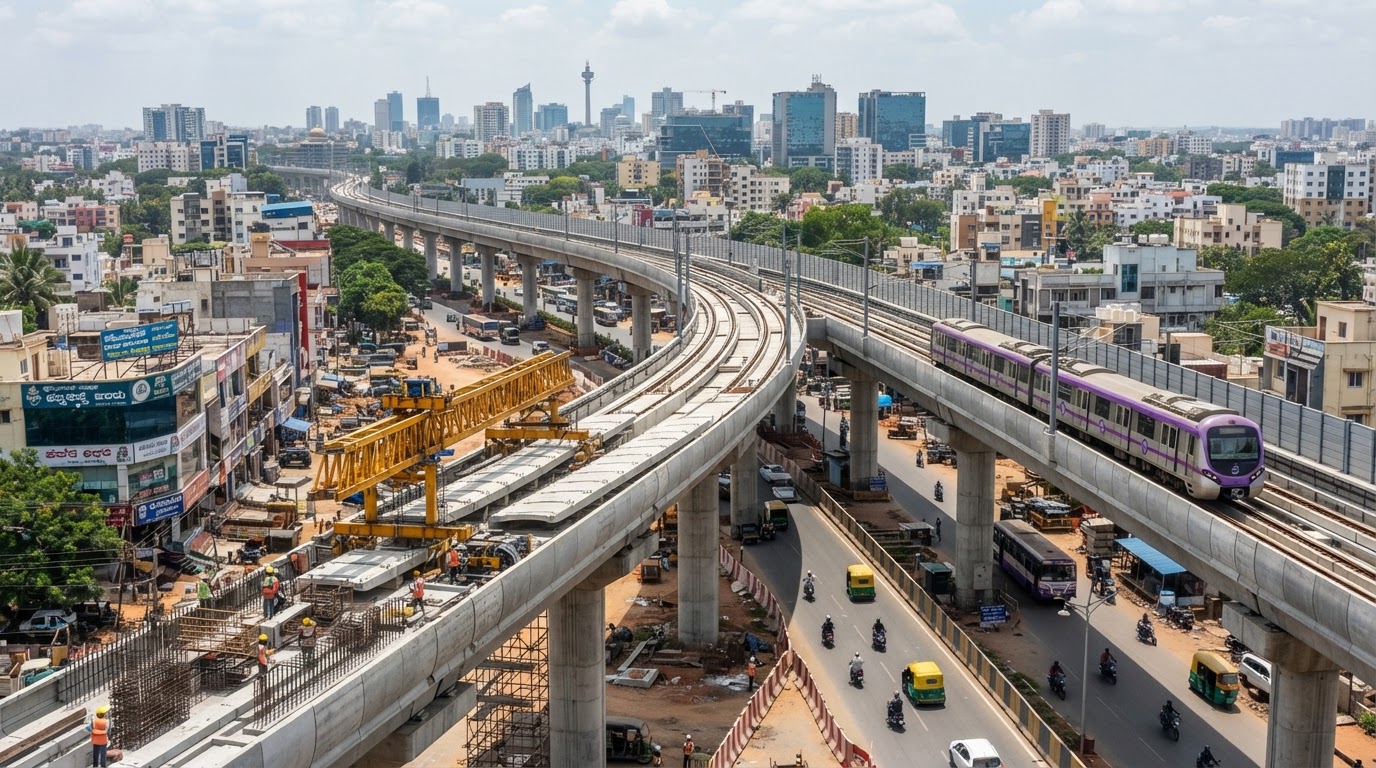
Bengaluru Metro Phase 2: Impact on Property Prices
The Phase 2 expansion adds 100+ km of new metro lines. We analyze which corridors will see the strongest property price re-rating.
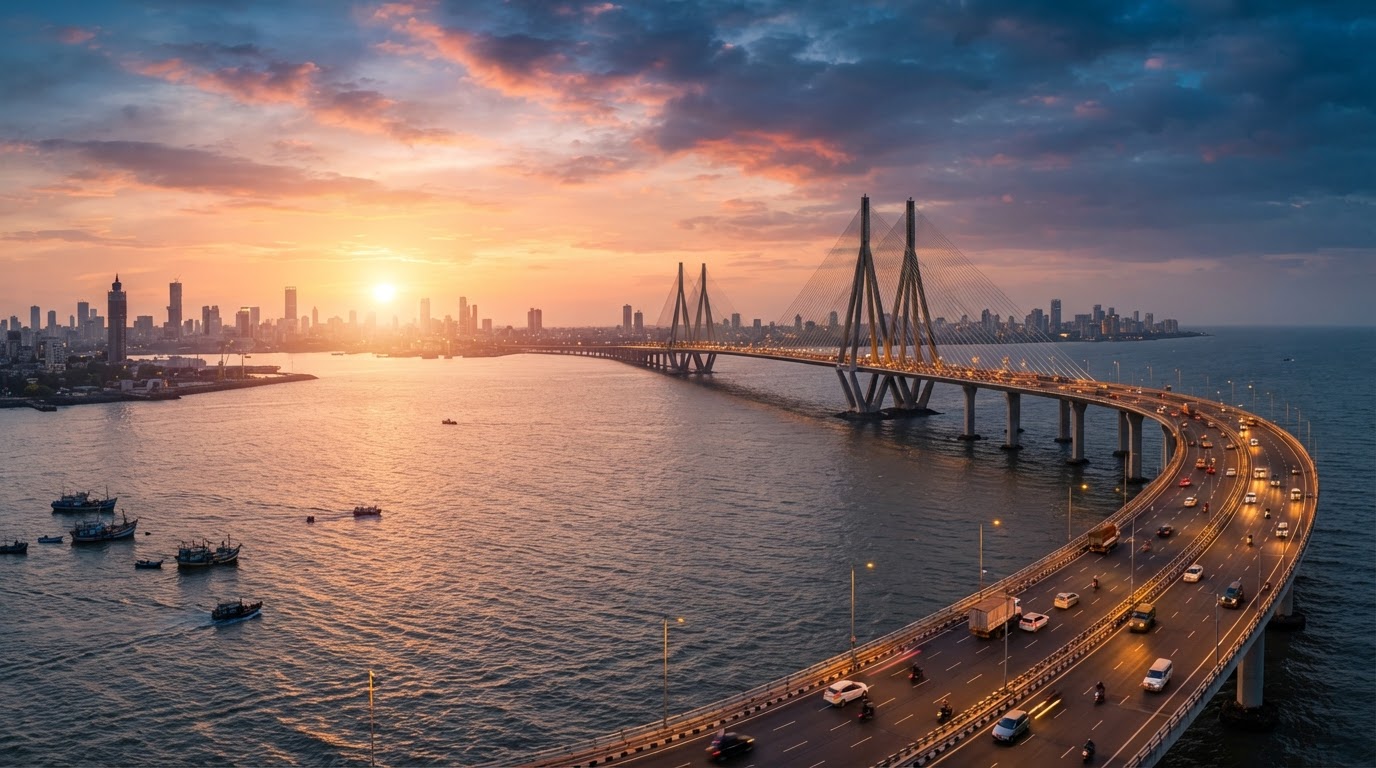
Mumbai Trans Harbour Link (MTHL): Navi Mumbai Re-Rating
The 22-km sea bridge connecting Mumbai to Navi Mumbai is operational, collapsing commute times and re-rating Navi Mumbai property.
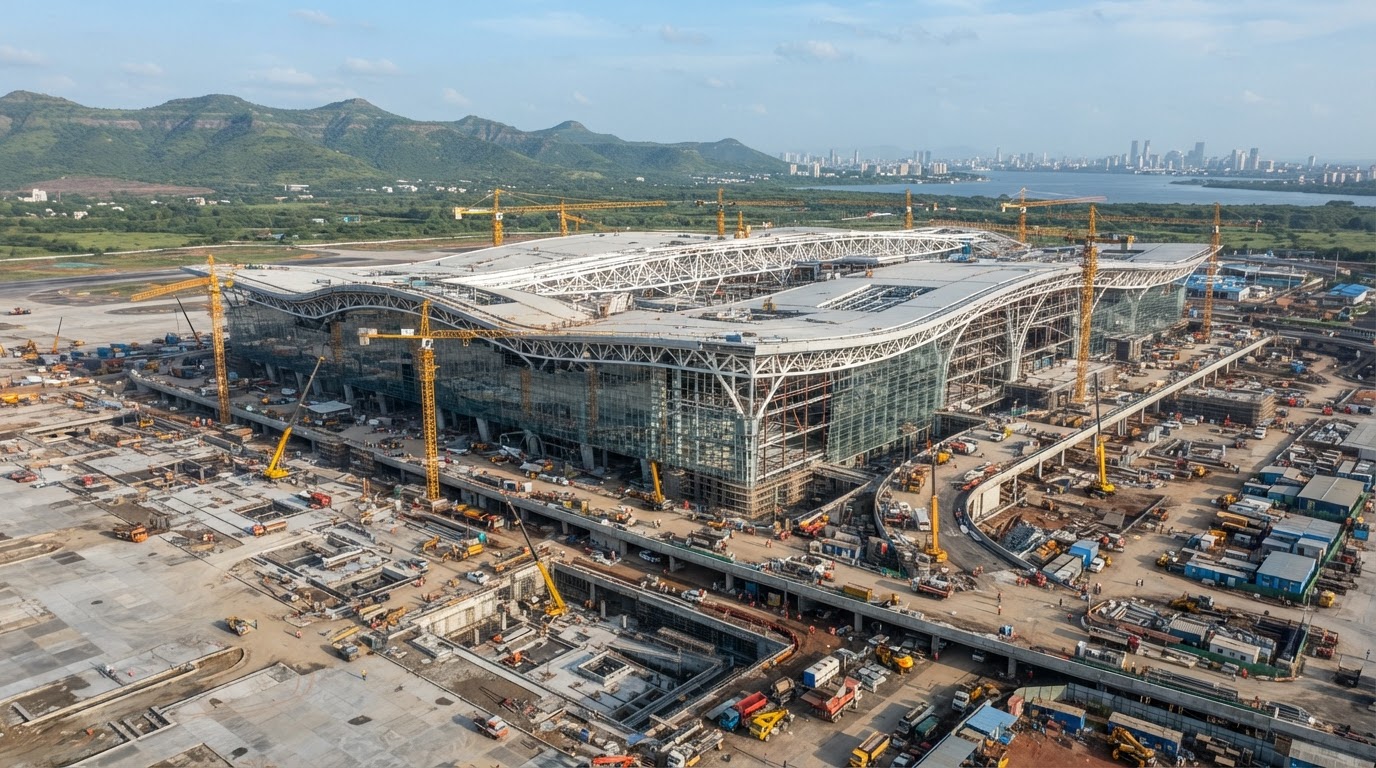
Navi Mumbai International Airport (NMIA): The Investment Thesis
NMIA is India's second greenfield airport in a metro, creating a dual-airport system for Mumbai. We analyze the real estate investment thesis.